
Real answers
Warning Light Diagnostics
Check engine, lane assist, collision alert, or any warning light that will not go away. We scan the full system and find the actual cause — not a guess.
Learn more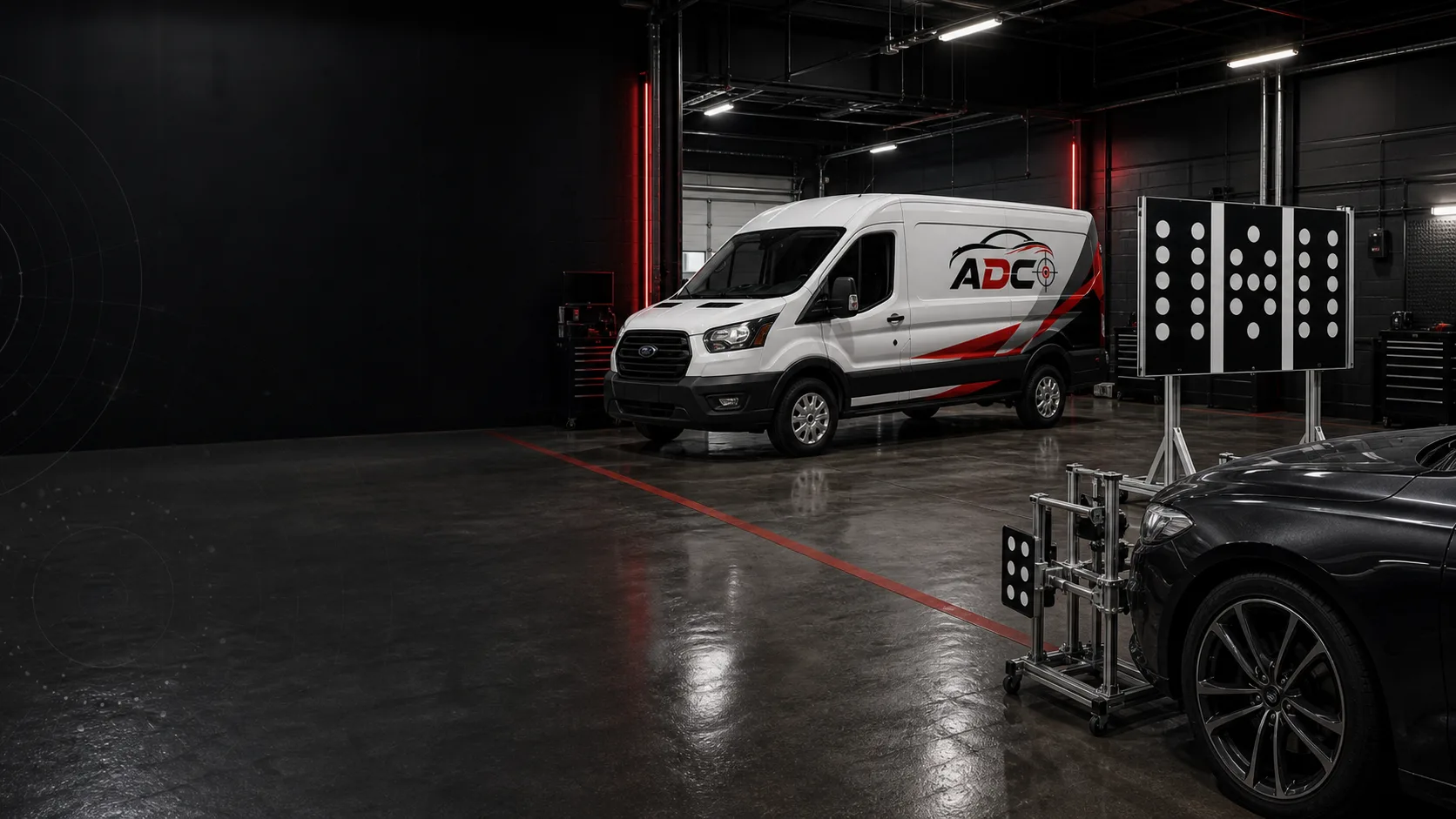
Diagnose. Calibrate. Deliver.
When your body shop, glass shop, or dealer says your car needs ADAS calibration, ADC handles it in Springfield, IL. Same factory procedures as the dealer, full documentation for your insurance — without the two-week wait.
Was your car just repaired or your windshield replaced? Find out if you need calibration
Diagnostics and calibration done on the same car, in the same visit. Drop off once, pick up working.
Most calibrations done same day or next day — not weeks out like a dealer service appointment.
We follow your car maker's exact calibration steps. Same standards as the dealer, with full paperwork.
Body shops, collision centers, and glass shops — we bring our equipment to your bay.
Most modern cars need at least one calibration after a collision repair, windshield replacement, or suspension job — usually more. ADC handles all of it in one visit, with paperwork your insurance will accept and a turnaround measured in days, not weeks.
Check engine, lane assist, collision alert, or any warning light that will not go away. We scan the full system and find the actual cause — not a guess.
Learn moreResetting the cameras, radar, and sensors that power lane keep assist, automatic braking, blind spot warning, and adaptive cruise control. Often called ADAS calibration.
Learn moreAfter a bumper, fender, mirror, suspension, or body repair, your car's cameras and sensors usually need recalibration before lane assist and automatic braking will work correctly.
Learn moreReplacing your windshield disturbs the forward camera mounted behind it. Without recalibration, lane keep and forward collision warning will not work right.
Learn moreForward radar behind the grille and side sensors need precise aim for adaptive cruise, automatic emergency braking, and blind spot monitoring to work as designed.
Learn moreEvery job follows the same path so there are no surprises and no second appointments. We tell you upfront what is needed, what it costs, and what you get back when the work is done.
Send your VIN, what was repaired, and any warning lights. We figure out what calibration your car needs and what it should cost.
Every car maker has specific calibration steps. We pull yours and confirm exactly which cameras, radar, or sensors need to be calibrated — and what conditions are required.
Manufacturer procedure citations, the reason calibration is needed, and the scan results — packaged so your body shop or insurance carrier can see why this work is required.
Sometimes a stored fault code, a misaligned sensor, or a bracket from the repair stops the calibration. We find the real cause instead of sending you to the dealer.
Cameras, radar, and sensors aimed and reset using factory targets and procedures. Indoor bay or mobile, depending on what your car maker requires.
Final scan report, calibration confirmation, and the manufacturer documentation — for you, your body shop, and your insurance file.
Modern cars (2018 and newer especially) almost always need at least one camera, radar, or sensor recalibrated after these repairs. If your body shop or dealer mentioned ADAS calibration, this is why.
Carriers do not just want a line item that says "calibration was performed." They want proof — the manufacturer's exact procedure, the reason the calibration was needed, and the result. Every job we do comes with all of it, packaged for your claim.
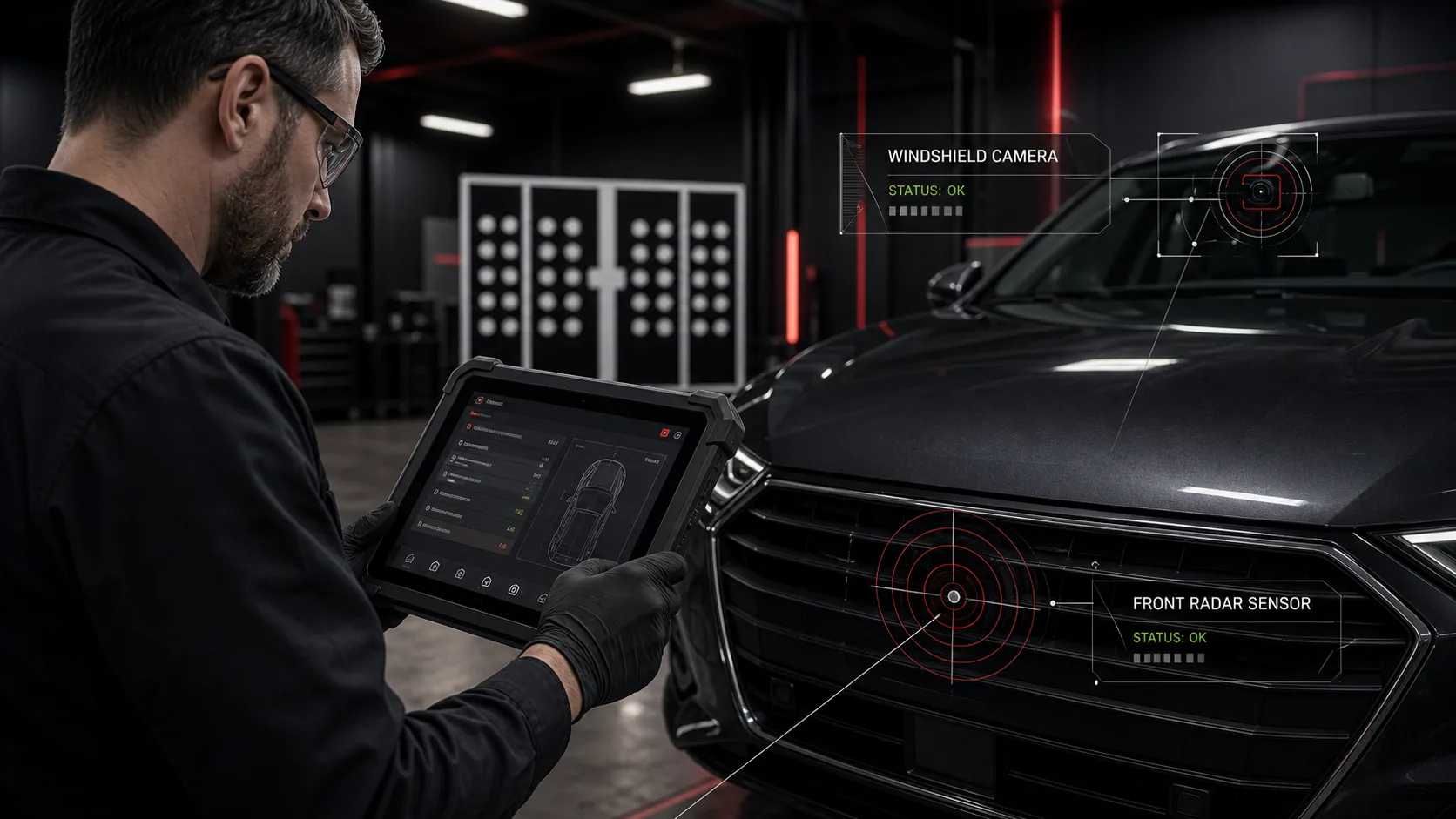
We use Autel IA700-series calibration equipment — the same family of gear used at dealerships and certified collision centers. Calibration follows your car maker's exact procedures, pulled fresh by VIN. No generic shortcuts.
We use Autel IA700-series calibration targets — the same equipment family used at dealerships and certified collision centers.
We pull your car maker's exact calibration steps from official sources and follow them. No shortcuts, no generic procedures.
Final scan, calibration confirmation, and the procedure references — for you, your body shop, and your insurance file.
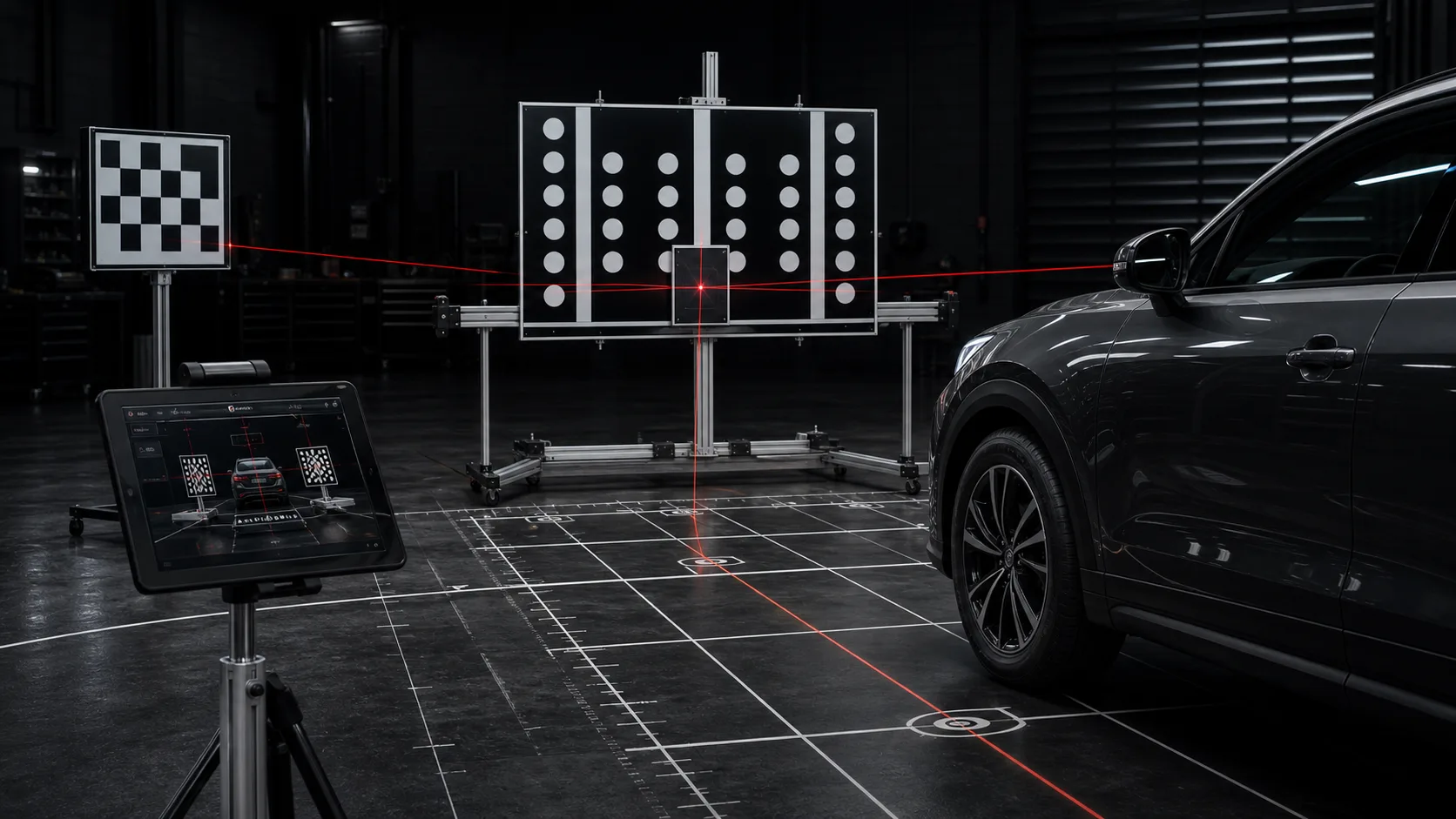
Mobile sublet calibration, post-scan documentation, blueprinting support, supplement evidence — written for shop owners and estimators, not drivers.
Yes. Modern cars rely on cameras, radar, and sensors for lane keep assist, automatic braking, blind spot warning, and adaptive cruise control. After a collision repair, windshield replacement, bumper or mirror work, suspension repair, or sensor replacement, those parts get bumped out of alignment. Without recalibration, those safety features can be off by inches — which means they fire late, miss things, or stop working entirely. ADAS calibration resets them so they work the way the car maker intended.
It depends on your car and what was repaired — usually one to three sensor systems need calibration after a typical collision or windshield job. Send us your VIN and a quick description of the repair and we will give you a straight number before you commit.
Usually, yes — when the calibration is required by the repair procedure and properly documented. That's why our workflow includes the manufacturer's procedure citation, the scan records, and the final calibration report. Carriers want proof, and we provide exactly what they ask for.
Most calibrations take a few hours. Some require a road test in addition to the in-bay work. We schedule jobs so most cars are in and out the same day or the next day — not weeks out like a dealer.
That happens — usually because of a stored fault code, a misaligned sensor, or a mounting bracket from the repair. Most calibration shops would just send you to the dealer at that point. We diagnose the actual cause and fix it, so you do not pay twice.
Mostly. ADAS calibration applies to vehicles with cameras, radar, and driver-assistance systems — typically 2015 and newer (more common on 2018+). Older cars can still come in for warning light diagnostics and engine system scans.
Yes. Mobile service is available for body shops, collision centers, and glass shops in the Springfield area. We bring the calibration equipment to your bay so the vehicle never leaves your shop. Drivers can come to us in Springfield.
Autel IA700-series ADAS calibration equipment with manufacturer data subscriptions. The IA700 family is what dealerships and certified collision centers use — it covers most modern vehicle camera, radar, and sensor systems.
Tell us what was repaired (or what warning light came on) and we will tell you exactly what your car needs.